Service Design Case Study: BSI Accord Digital Transformation
A Service Design led digital transformation project for BSI, detailing the research and strategy behind BSI Accord, a unified platform to revolutionize standards development and delivery.
Published: 1 June 2020
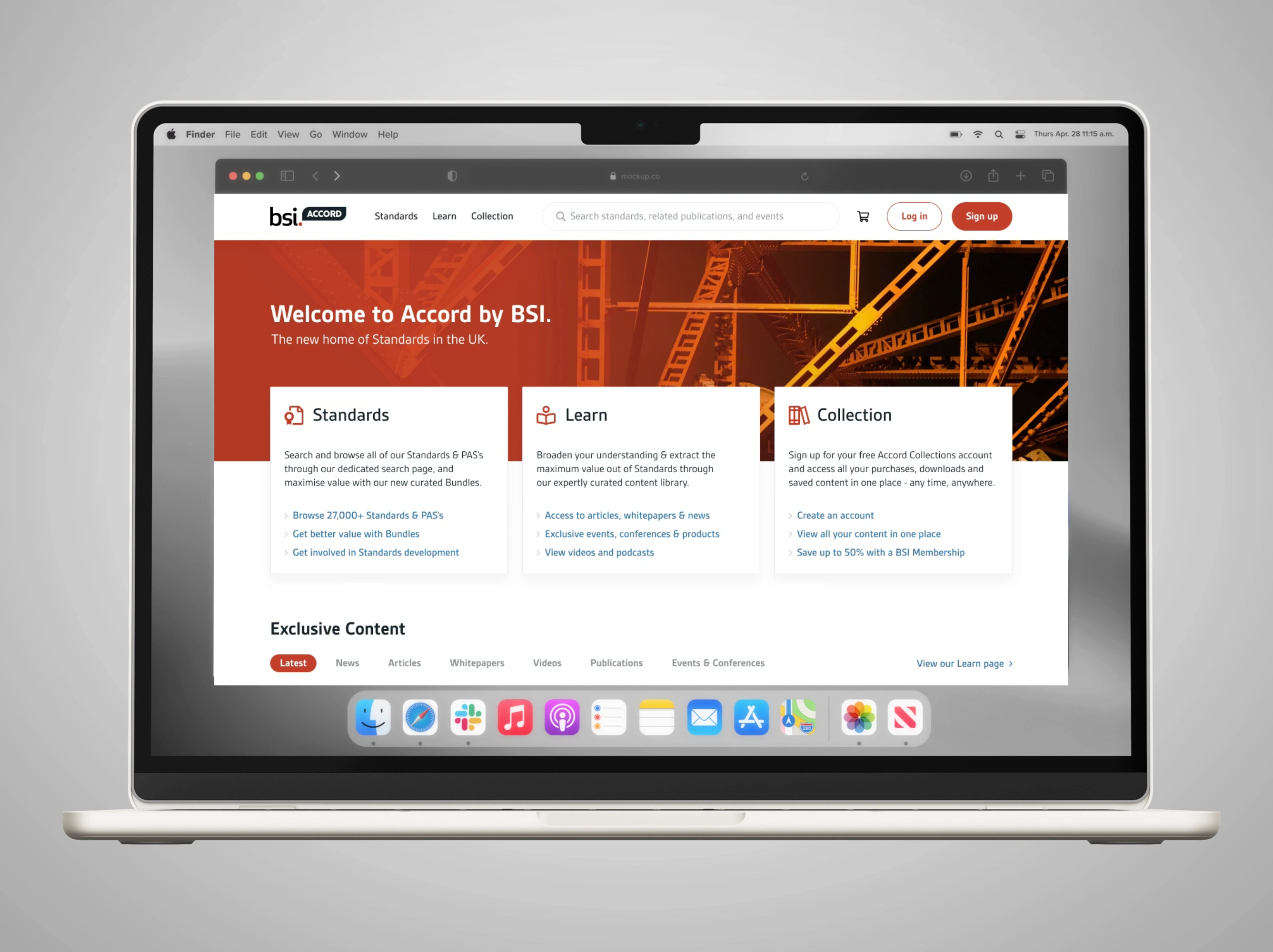
The Accord Initiative: Charting BSI’s Digital Future
The British Standards Institution (BSI), a cornerstone of UK industry, stood at a critical juncture. We embarked on a comprehensive journey to modernise their digital service delivery, a project designed not only to enhance their offerings but also to strategically reinforce their foundational role as the UK’s National Standards Body. Over a rigorous three-month period of in-depth research and analytical inquiry, our team successfully established the strategic groundwork for what would become BSI Accord — a transformative digital platform conceived to revolutionise how industry standards are both developed and delivered.
Our primary objective for this phase, titled “BSI Accord: Service Design for Digital Transformation,” was to conduct extensive, human-centred research. We aimed to deeply understand the diverse needs of BSI’s users, meticulously evaluate their existing technological capabilities, and thoroughly map their current organisational ways of working. These critical insights were gathered with the clear intent to directly inform the strategic direction and holistic service design of the BSI Accord platform. This new, unified system was envisioned to modernise BSI’s entire service ecosystem and significantly enhance customer engagement across the board.
The scope of our research was comprehensive. It encompassed broad stakeholder engagement, including 13 in-depth client interviews that spanned various industry sectors, alongside over 35 internal stakeholder interviews with BSI leadership and operational staff. To round out our understanding, we conducted a thorough analysis of key competitor service models within the dynamic information services market. This multi-faceted approach was incredibly fruitful, yielding 324 distinct, evidence-based proof points that would become the building blocks for our strategy. This intensive research and discovery phase was executed over a focused period of three months, leveraging a dedicated service design research team and benefiting from privileged access to a wide spectrum of BSI stakeholders and client representatives.
Navigating the Crossroads: BSI’s Digital Imperative
The British Standards Institution (BSI) found itself at a critical crossroads. To sustain its market leadership and uphold its core relevance as the UK’s National Standards Body, an evolution of its digital service delivery was not just an option, but an imperative. Our initial investigations quickly revealed several interconnected service challenges, painting a clear picture that current systems and user journeys were struggling to meet evolving user expectations and crucial strategic business needs.
The signs were unmistakable. A striking 90% of BSI’s standards had remained unpurchased over the preceding 12 months, a figure that strongly suggested fundamental issues with visibility, accessibility, or the perceived value within the existing user journey. Users consistently told us, and their behaviour showed, that they encountered significant friction when trying to effectively discover content or navigate seamlessly across BSI’s existing digital touchpoints. Beyond the standards themselves, the inherent value proposition of BSI’s broader offerings was not being effectively articulated or communicated to either potential or existing customers, leading to missed opportunities.
Internally, legacy processes and fragmented systems were actively creating a cascade of inefficiencies. These weren’t just abstract operational issues; they were negatively impacting both external client experiences and internal employee service workflows, creating frustration and consuming valuable resources. The overall digital experience provided by BSI was demonstrably falling short of contemporary user expectations, particularly when it came to mobile accessibility and the intuitive self-service capabilities that users now take for granted. Furthermore, communication regarding critical updates, revisions to standards, and new service offerings was frequently ineffective, leading to missed opportunities for engagement and, at times, significant user frustration.
The central service design challenge, therefore, crystallised before us: we needed to clearly identify a strategic pathway for BSI to holistically modernise its digital services. This wasn’t just about resolving these core deficiencies; it was about significantly enhancing BSI’s market penetration and firmly reinforcing its authoritative position within a competitive and rapidly evolving landscape.
Blueprint for Transformation: The BSI Accord Concept
Our strategic approach to addressing BSI’s multifaceted challenges was fundamentally rooted in achieving a deep, evidence-based understanding of their diverse users, the competitive market dynamics, and their intricate internal service landscape. The methodology we adopted centred on a comprehensive mixed-methods research strategy, one that seamlessly integrated quantitative data analysis with the rich qualitative insights derived from direct stakeholder and client engagement. While the source material didn’t explicitly list formal guiding principles for this research phase, our work was implicitly driven by an unwavering commitment to user-centricity, a steadfast dedication to formulating evidence-based recommendations, and a consistently forward-looking perspective on digital service design best practices.
From this extensive research, the primary service design solution began to emerge: the conceptualisation of a carefully structured, two-tiered approach for the BSI Accord platform. This framework was meticulously designed to address distinct stages of the user engagement journey, ensuring a logical and progressive enhancement of the service.
-
Tier 0: Laying the Foundation for Discovery: This foundational tier was laser-focused on radically improving the initial user experience. We emphasised dramatically enhanced discoverability of standards and the creation of more intuitive pathways for single-copy purchases. The overarching aim here was to significantly lower any existing barriers to entry, making BSI’s core offerings demonstrably more accessible and user-friendly from the very first interaction.
-
Tier 1: Cultivating Deeper Engagement: Building strategically upon the improved discovery experience, this second tier was designed to cultivate deeper, more sustained relationships with users. Key service features envisioned for this level included personalised alerting mechanisms to keep users informed of relevant changes, interactive commenting functionalities to foster a sense of community and feedback, and enhanced content storage capabilities for greater user convenience. Critically, this engagement level was also designed to gather invaluable behavioural insights, which would continuously inform product development and allow for iterative service refinement over time.
This structured, two-tiered service design approach provided BSI with a clear, phased roadmap for the development of the Accord platform. It ensured that foundational user needs related to discovery and accessibility would be comprehensively addressed before layering in more advanced engagement features, setting the stage for a successful and sustainable digital transformation.
The Deep Dive: Our Methodology for Unearthing Truths
The service design research process for BSI Accord was meticulously architected to gather comprehensive insights from multiple critical perspectives. We knew that to ensure our final recommendations were robustly well-grounded and genuinely actionable, we needed a methodology that was both thorough and adaptable.

Our approach to Data Collection & Analysis was deliberately multi-faceted. We began by conducting 13 in-depth ethnographic interviews with BSI clients from a diverse range of sectors. This allowed us to profoundly understand their needs, existing pain points, and explicit expectations within their current service journeys. Internally, our engagement was just as crucial; we connected with over 35 BSI stakeholders, including senior leadership and operational staff, to gather invaluable insights into existing processes, internal challenges, and overarching strategic objectives. To broaden our perspective further, we performed a thorough analysis of user behaviour data harvested from existing BSI platforms and undertook a detailed competitive analysis, benchmarking against market leaders within the information services industry. It was this careful triangulation of data sources – client voices, internal knowledge, user data, and market context – that allowed for a robust and holistic understanding of BSI’s current service state and the rich opportunities that lay ahead.
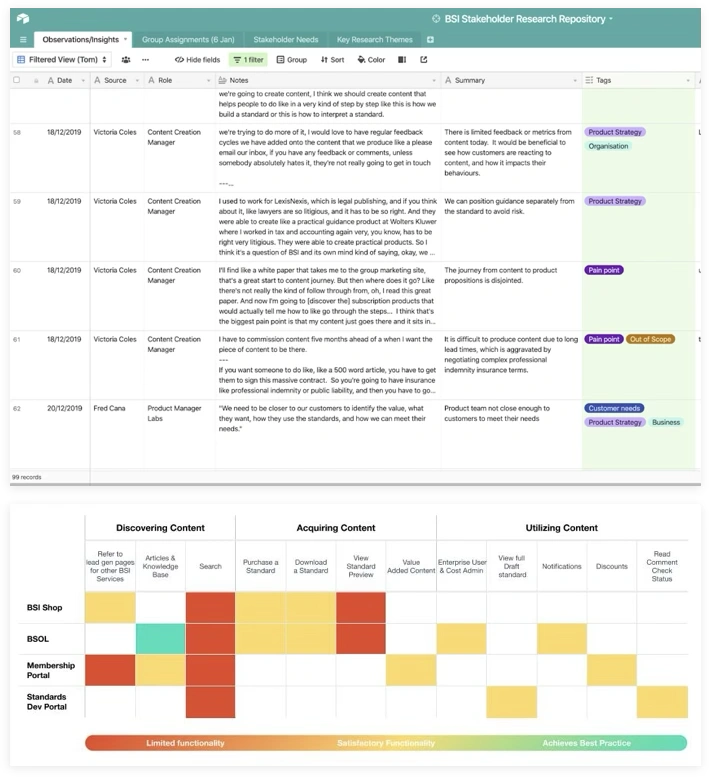
Stakeholder Engagement was not a one-off activity but a continuous cornerstone of our service design methodology. By actively and consistently involving BSI leadership, operational teams, and key client representatives throughout the entire research process, we ensured that a diverse array of perspectives was always considered. This collaborative approach was instrumental in fostering robust buy-in for the emerging findings and the strategic recommendations that would follow.
While this initial discovery phase did not involve the actual technical development of the BSI Accord platform, our rigorous research process was fundamental to its Service Prototyping and Conceptualisation. We focused on defining its conceptual service framework, identifying the key features that would address the unearthed needs, and articulating its strategic importance to BSI’s future. The 324 evidence-based proof points gathered during our research directly informed the detailed design brief for the future platform, effectively acting as a comprehensive blueprint for the intended user experience.
The Validation and Iteration of our findings was an ongoing, organic process woven throughout the research. We achieved this through the systematic cross-referencing of data from our multiple sources – client interviews, internal stakeholder input, market analysis, and user data. Consequently, the strategic recommendations we formulated were directly derived from this validated body of comprehensive research. We understood that formal usability testing and detailed service blueprint validation would constitute critical subsequent phases during the BSI Accord platform’s detailed design and development lifecycle.
It was the systematic and rigorous execution of this multi-layered research methodology that directly led us to identify the critical areas requiring strategic service intervention, painting a clear picture of the path forward for BSI.
Illuminating the Path: Key Insights, Strategic Recommendations, and Envisioned Impact
Our comprehensive service design research for BSI yielded a treasure trove of significant insights into their operational landscape, the nuances of crucial user experiences, and their competitive market positioning. These findings were not just interesting observations; they directly shaped our strategic recommendations and powerfully highlighted the transformative potential of the proposed BSI Accord platform. The research crystallised into the identification of six critical service challenge areas that were demonstrably impeding BSI’s digital effectiveness:
-
Bridging the Content Discovery Gap: A stark reality emerged: users faced profound difficulty in finding relevant standards. Our data consistently showed that while 59% of visits originated from search, a high 68% bounce rate indicated that these information-seeking journeys were frequently unsuccessful. Compounding this, an overwhelming 93% of the top 5,000 search terms were specific standards numbers rather than descriptive keywords. This, coupled with landing pages that often failed to provide targeted information for diverse user types, led to fragmented and frustrating user paths.
-
Instilling Purchase Confidence: We found that users frequently lacked the necessary contextual information to make informed purchasing decisions within the existing service flow. Critical questions regarding the currency and relevance of standards, how competitors typically used them, the historical development of specific standards, their practical implementation value, and clear, transparent pricing options often remained unanswered, creating significant hesitation at the point of purchase.
-
Clarifying the Value Proposition: BSI’s added-value services, extending beyond the standards themselves, were not being effectively communicated or integrated into the user journey. This was vividly evidenced by the fact that 54% of customers were non-members, thereby missing out on a wealth of additional valuable content. Many small businesses, we learned, perceived standards merely as a cost to be borne rather than a strategic investment, and the broader benefits of BSI membership beyond simple discounts were poorly understood.
-
Addressing the Impact of Legacy Processes: Outdated manual processes were creating significant and pervasive friction points within the service experience. Enterprise clients, for instance, often required manual interventions for basic operations like accessing usage reports. This inefficiency led to widespread human errors in client data management, alongside inflexible payment options and severely constrained customer service channels.
-
Closing Critical Digital Experience Gaps: The existing platform fell significantly short of contemporary digital expectations. Despite 20% of all traffic originating from mobile devices, a substantial 79% bounce rate on these devices starkly highlighted poor mobile optimisation and, effectively, a broken service experience for a key user segment. Multiple, disparate authentication systems created unnecessary user friction, Search Engine Optimisation (SEO) was inadequate, and basic digital conveniences like automated downloads or comprehensive self-service account management were notably absent.
-
Overcoming Communication Challenges: We discovered that critical updates regarding regulatory changes, standard revisions, and compliance requirements were not being effectively communicated or proactively delivered to users. Documentation for changes was often insufficient. Participants in the standards development process found it difficult to track relevant updates, and marketing campaigns frequently underperformed due to poor content targeting and an absence of personalised communication strategies.
Beyond these pressing service challenges, our research also uncovered a Significant Market Opportunity for BSI. We estimated that approximately 1 million commercially viable businesses in the UK alone were not currently purchasing standards. Capturing even a conservative 10% of this untapped market represented a potential £200 million opportunity. This starkly underscored the critical importance for BSI to differentiate through a superior user experience and streamlined service delivery, especially as professional users are increasingly accustomed to sophisticated digital subscription services offered by other information providers.
Based on these compelling findings, our core recommendations for the BSI Accord initiative coalesced around a multi-pronged service implementation strategy, designed to address the challenges holistically:
-
Re-architecting the Digital Backbone: At the heart of our recommendations was a strategic shift towards a modern, cloud-native infrastructure. This wasn’t just a technical upgrade; it was about building the resilience and scalability essential for future service demands. We advocated for adopting a microservices architecture to foster greater flexibility, establishing contemporary agile development practices to support continuous service improvement, and embracing an API-first development approach. This would not only streamline current operations but also facilitate seamless integrations and pave the way for future service innovations.
-
Transforming the Organisational DNA: To truly embed these technological advancements and cultivate a deeply customer-centric service culture, we recommended a significant organisational transformation. This involved implementing cross-functional service design squads, establishing clear product ownership for different facets of BSI Accord, and creating autonomous, empowered teams focused on delivering end-to-end service excellence. Robust support through agile coaching would be critical to embed these new ways of working and foster a spirit of continuous collaboration.
-
Elevating the Customer Experience: The ultimate aim was to fundamentally enhance the end-to-end user journey. Our recommendations focused on developing highly personalised user pathways, ensuring a seamless and consistent cross-platform experience, significantly enhancing self-service capabilities to empower users, and radically improving content discovery mechanisms to minimise user effort and frustration.
The journey through this intensive research phase was rich with profound learnings about BSI’s diverse user base and intricate operational context. Several key takeaways stood out: the undeniable and critical need for simplified access to information and intuitive user journeys became abundantly clear. We also learned the paramount importance of clearly articulating BSI’s value proposition beyond the standards themselves. Perhaps most significantly, the research highlighted the profound impact of internal processes on the external user experience and underscored the absolute necessity for proactive, targeted, and personalised communication strategies woven into the fabric of the service ecosystem.
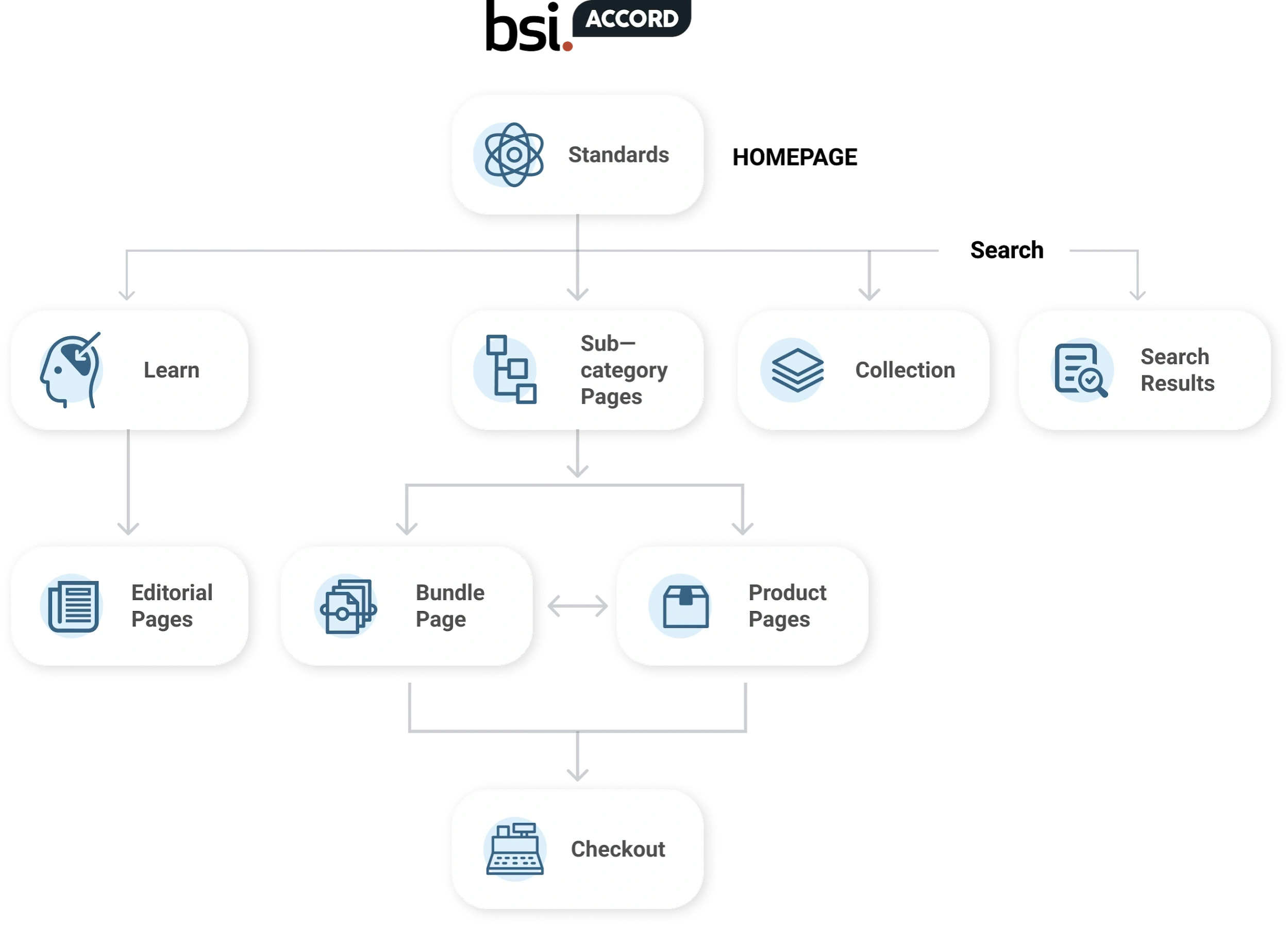
The projected impact of successfully implementing the BSI Accord platform, guided by these research findings and strategic recommendations, was substantial and multifaceted:
- For the User: We anticipated far more intuitive content discovery, highly personalised user journeys tailored to individual needs and industry contexts, enhanced self-service capabilities that would significantly reduce reliance on support channels, and a demonstrably improved, seamless mobile experience across the entire service.
- For the Business: The strategic service changes were expected to facilitate entry into the largely untapped market of 1 million UK businesses, representing a tangible £200 million opportunity if even a 10% share could be captured. Beyond this significant market expansion, increased customer satisfaction, improved operational efficiency driven by streamlined service processes, and an enhanced, more resilient competitive position were key anticipated outcomes.
- Technologically: The proposed modernisation would result in a more scalable and resilient service infrastructure, capable of adapting to future demands. It promised a faster time-to-market for new features and services, a significant reduction in accumulated technical debt, and enhanced security and compliance capabilities, providing a robust foundation for ongoing service evolution and innovation.
The overall success of this ambitious digital transformation, we concluded, would hinge on the careful and coordinated orchestration of these technological modernisations, fundamental organisational shifts, and an unwavering, relentless focus on user-centred service design. This needed to be underpinned by clear leadership vision and executed by empowered, agile teams.

A Concluding Vision for BSI’s Digital Evolution:
Ultimately, our comprehensive service design research and strategic analysis for the BSI Accord initiative laid out a clear and actionable roadmap for transforming their digital landscape. By anchoring our approach in genuine user needs, leveraging robust evidence-based insights, and proposing a strategically sound implementation plan, we aimed to create a definitive ‘win-win’ for BSI and its diverse users. This envisioned a future where accessing and engaging with standards is not only more efficient and valuable for BSI’s business but also significantly more intuitive, supportive, and empowering for its global user base. The journey was about reimagining how a National Standards Body connects with and serves its community in a modern, digitally-driven world, ensuring continued relevance and paving the way for future innovation.