
Service Design Case Study: Three - Build the Fun
Project Background
The Starting Point: Redefining Three’s Customer Connectivity
The “Build the Fun” initiative for Three UK, a major telecommunications provider, was conceived as part of a multi-year transformation programme. The core “ask” for this service design endeavour was to move Three UK away from being perceived as a mere utility provider towards becoming a “true connectivity player and best-loved UK brand.” This required a fundamental reimagining of its consumer offerings, propositions, products, and services, all underpinned by a new technology platform and a transformed customer interaction model. The overarching ambition was to craft a simple, flexible, and engaging connectivity offering that would not only genuinely serve customer needs and break the prevailing “cheaper deal” mindset but also powerfully drive Three’s five-year business goals.
Our scope encompassed Three’s core consumer products, services, and propositions. The strategic focus was on creating a coherent product range and a dynamic framework for customer interaction adaptable over the next five years. This involved more than just new product ideation; it demanded a thorough rethinking of the customer relationship, service mechanics, and foundational business principles.
The strategic framework was intended to guide development over a five-year period, with phased launches anticipated from 2020 through 2022+. The project involved a comprehensive internal effort, including initial kick-off workshops with key business stakeholders, in-depth interviews with subject matter experts (SMEs), subsequent stakeholder workshops to gather iterative feedback on the evolving framework, and multiple rounds of user research to rigorously test the framework and its guiding principles.
The Challenge: Navigating a Commoditised Market and Customer Indifference
Three UK, like many in the telecommunications sector, faced a significant value perception problem. The existing business model had inadvertently fostered a market where customers viewed mobile connectivity largely as a utility, with little differentiation perceived between providers. Insights gathered from initial research highlighted a stark reality: while connectivity was considered a fundamental right, providers received little credit for enabling it but faced a deluge of complaints when service quality faltered. Customers often saw their provider as an old-fashioned, analogue component of their digital lives, with deals and discounts becoming the primary drivers for loyalty or switching, rather than a genuine brand connection or emotional relationship.
Many customers remained with their provider for extended periods, assuming they had a good deal, yet simultaneously felt that the best offers were reserved for new customers, leading to a transactional, non-emotional relationship. There was a prevailing confusion about what constituted a truly good deal, with the entire industry often viewed as undifferentiated and similarly lacking in innovation. The core challenge for Three was stark: if it continued without a significant change to its consumer offerings, it would lose its chance of having a clear point of difference in a saturated market. The mission, therefore, was to devise a strategy that could break the pervasive “where can I get a cheaper deal?” mindset, address the lack of differentiation, and truly serve the evolving needs and expectations of its target customer segments, all while driving its ambitious business goals.
The “Build the Fun” Vision: A New Framework for Engagement
The proposed solution was a comprehensive framework and a new customer-centric philosophy encapsulated by the name “Build the Fun.” This approach was designed to directly address the identified challenges of value perception, commoditisation, and customer apathy by offering a more engaging, flexible, and personalised experience. The core idea was to empower customers to “build their very own world of Three that changes with them,” moving beyond rigid contracts, bill shock, and irrelevant offers.
The “Build the Fun” framework was built upon several key tenets. Firstly, it championed Personalised Configuration, inviting customers to articulate their primary needs. This would enable Three to match them with a suitable “primary offering,” complemented by a selection of “juicy extras” designed to enhance their specific experience. The principle that customers should be able to “create, change and pay for your Three, any way you want” was central to this idea. Secondly, the framework embraced Dynamic Adaptation. By leveraging data, Three aimed to regularly optimise customer packages, ensuring that each individual’s “world of Three” would continuously evolve to match their changing needs and circumstances. Thirdly, Simplified Management was a priority; a clear and straightforward monthly bill would empower customers to easily understand and manage what they were renting, buying, and financing.
A crucial aspect of the framework was its Layered Value Proposition, which structured the customer relationship across three distinct tiers. At the foundation were the “Things We Just Get Right” – ensuring excellence in core services such as voice, data, customer support, and transparent billing, which are fundamental expectations for any connectivity provider. Building upon this, “Always-on Unique Benefits” offered a suite of distinctive advantages that Three customers could choose to access and utilise at any time, adding a consistent layer of unique value. Finally, at the pinnacle of this personalised offering were “Contextually Relevant to You” elements: specific products and services meticulously designed with the individual customer and their unique circumstances in mind.

The theoretical underpinning of this framework was a proactive, dynamic, and holistic approach to customer relationships, designed to allow Three to compete effectively against competitors whose flexible offers were not deemed truly customer-centric. The entire framework was designed to be guided by six core principles—Transparent, Simple, Relevant, Fair, Value, and Reward—derived from Net Promoter Score (NPS) drivers and customer interview insights, ensuring all future decisions would align with this new vision.
Designing the Future: Methodology, Research, and Co-creation
The development of the “Build the Fun” framework was a deeply collaborative and research-driven process, designed to ensure it was rooted in both business viability and genuine customer needs. Our methodology emphasised iterative learning and co-creation, unfolding across several key stages.
Our journey began with Stakeholder Engagement & Requirements Gathering. The process commenced with intensive Kick-off Workshops involving key business stakeholders. These initial sessions proved crucial for capturing internal requirements, understanding diverse business expectations, and fostering alignment on the project’s strategic importance. This engagement with stakeholders was an ongoing dialogue, continuing through dedicated workshops designed to present the evolving framework, demonstrate its mechanics in action, and gather critical feedback that would iteratively refine its direction.
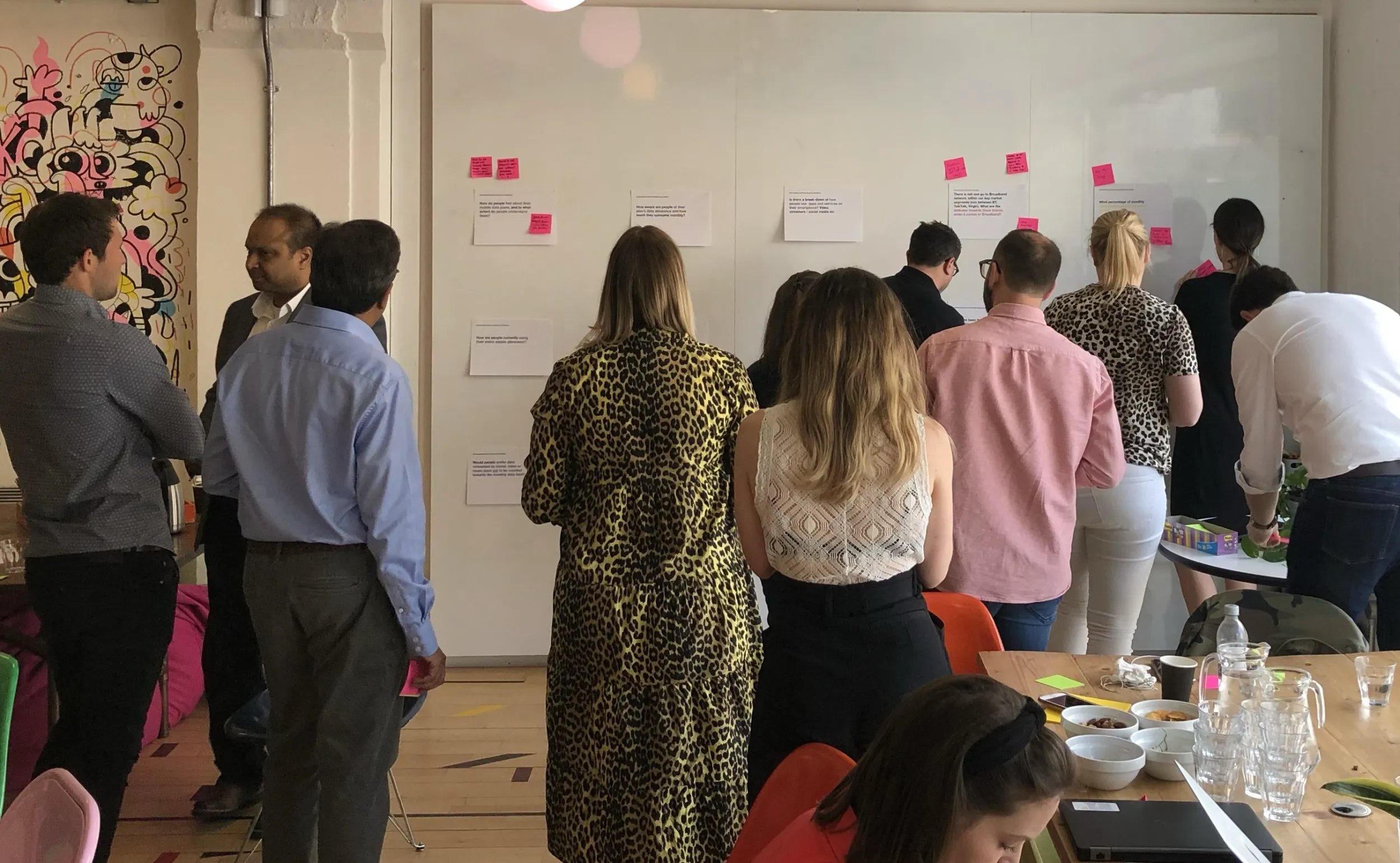
To gain a comprehensive understanding of the internal landscape, we conducted a Deep Dive into Subject Matter Expertise. This involved in-depth qualitative interviews with Subject Matter Experts (SMEs) from various departments across Three. Employing this ethnographic approach allowed our project team to tap into the rich institutional knowledge within the company, thereby understanding existing capabilities, technical constraints, and operational considerations that would inevitably impact the new framework’s implementation.
A cornerstone of our approach was Customer-Centric Design through Iterative Research. We placed significant emphasis on understanding and incorporating customer needs through direct engagement, which materialised as three distinct rounds of user research sessions. During these sessions, prototypes and conceptualisations of the “Build the Fun” framework and its underlying principles were presented directly to customers. Participants were tasked with activities such as attempting to build their own packages and were encouraged to articulate what they truly valued. This iterative testing methodology yielded invaluable insights into customer pain points, their desires, and their initial reactions to the proposed flexibility and personalisation. Key customer insights emerging from this research directly shaped and validated the framework. These included a strong desire to be recognised and rewarded for loyalty (not merely as new acquisitions), a clear need for providers to understand their individual interests and offer relevant options with a personal touch, and an unambiguous demand to “make things easy” through simplified, customisable packages that offered an escape from tedious processes.
The process also focused on Co-designing Proactive Engagement Mechanics. This involved meticulously detailing how customers could Configure their experience, whether in-store or online. We also mapped out how Monthly Optimisation would function, envisaged as being delivered via bills or the app and driven by improved data capture. Furthermore, we defined how In-life Triggers – such as changes in travel patterns or new technology purchases – would prompt relevant package adjustments and offers. These mechanics were collectively designed to make the customer relationship feel dynamic and responsive.

Finally, Embedding Principle-Based Design was integral to our methodology. The six guiding principles – Transparent, Simple, Relevant, Fair, Value, and Reward – were not an afterthought but were meticulously woven into the framework’s development from its very inception. These principles, explicitly derived from Net Promoter Score (NPS) drivers and learnings gleaned from customer interviews, served as a constant litmus test for all design decisions, ensuring the framework remained steadfastly aligned with its customer-centric goals.
This multi-faceted approach, combining internal expertise with direct customer feedback and iterative refinement, was fundamental to creating a framework that was not only innovative but also practical and resonant with its intended audience.
Impact and Horizon: Outcomes, Learnings, and the Path Forward
The comprehensive research and iterative development process for the “Build the Fun” framework yielded significant findings and a clear set of outcomes, painting a promising future for Three UK.
The Key Learnings & Customer Validations from Research were particularly illuminating. User research unequivocally confirmed that customers responded with overwhelming positivity to the ability to configure their own packages, underscoring the central insight that “People want the flexibility to choose the package that is right for them but need guidance.” While the initial complexity of such a choice was a concern for some, a guided interaction model made the framework feel both simple and empowering. A strong sentiment also emerged against being tied to long, inflexible contracts, only to then feel “forgotten,” particularly when new customers appeared to receive preferential deals; the framework’s inherent flexibility directly addressed this significant pain point. Furthermore, customers expressed genuine enjoyment at the prospect of “hearing good news” from Three, such as proactive suggestions for plan improvements or potential savings, indicating a clear desire for a more positive and ongoing relationship with their provider. The research also revealed that customers might make “surprising choices” for their primary offering (such as opting for insurance or a warranty) if given the flexibility, thereby moving beyond traditional mobile-centric views of value. Crucially, the six guiding principles (Transparent, Simple, Relevant, Fair, Value, Reward) resonated strongly, as they directly addressed common frustrations prevalent within the telecommunications industry.
The “Build the Fun” framework was meticulously designed not just to enhance customer satisfaction but also to deliver significant and measurable Anticipated Outcomes & Business Impact. The proactive, dynamic, and holistic approach was strategically positioned to allow Three to compete more effectively with existing flexible offers in the market, many of which were not perceived by customers as being truly customer-centric. The framework was also set to accommodate Three’s strategic plans to diversify its product range and customer types, thereby enabling the business to “sell more things to more people.” It was designed to protect and grow existing margins by shifting away from a purely price-driven model. Moreover, the introduction of in-life optimisation and personalised triggers was expected to open new and valuable opportunities for cross-selling and up-selling relevant extras. By being adaptable and consistently relevant, the framework aimed to encourage longer customer tenure, which would directly support the ambitious goal of doubling Earnings Before Interest and Taxes (EBIT). Ultimately, the framework was envisioned to significantly support the overall brand vision of becoming a “best-loved UK brand,” which in turn would be a key driver for Net Promoter Score (NPS) and overall business growth. The framework also leveraged and provided further strategic direction to “Rebus,” an internal system/project, ensuring coherence with broader business initiatives.
The project concluded with a clear, Phased Rollout for Transformation, outlining a strategic path for implementation. The 2020 Launch (Short Term) was to focus on defining the core contract product (including an Unlimited Minimum Viable Product (MVP)), aligning high-priority propositions such as Pay As You Go, Go Roam, Unboxed, Device Financing, and B2B services with the new framework’s structure (base offer + extras + ways to pay). This phase also prioritised the integration of Customer Relationship Management (CRM) and data analytics to achieve early wins through monthly optimisation and timely in-life triggers. Looking ahead, the 2021 Launch (Mid Term) aimed to define “out of category” functionalities, such as those for Device Financing or Insurance, as potential primary offerings. It also planned for the development of bill-splitting capabilities to support shared contracts, enhancements to customer customisation options (including contract length and upfront amounts), and a further build-out of CRM and data analytics to enable more comprehensive personalisation. Finally, the 2022+ Accelerated Growth (Long Term) phase would explore the long-term vision for evolving these out-of-category products into robust primary offerings that Three could become known for, thereby solidifying its position as a truly versatile connectivity player.
Concluding Vision: By embracing the “Build the Fun” framework, Three UK set a course to transform its relationship with customers. The shift towards flexibility, personalisation, and proactive engagement aimed to dismantle the perception of a commoditised utility. Instead, Three aspired to become an indispensable partner in its customers’ connected lives, fostering loyalty not through restrictive contracts but through genuine value, continuous relevance, and a shared sense of fun and discovery. This strategic pivot was designed to not only meet evolving customer expectations but also to secure Three’s long-term growth and its ambition to be the UK’s best-loved connectivity brand.