The MacGuffin Pattern
A framework for service designers who want to change systems, not just optimise within them.
Written For
Service designers across public and private sectors. They understand user research, service mapping, agile delivery—but are frustrated by their inability to influence policy, procurement, or organisational design.
A pattern I’m seeing more of is when service design work stays trapped in incremental delivery. You can deliver the perfect service, nail every user need, hit every KPI—and still leave the underlying system exactly as broken as when you started.
The diagnostic question comes down to “Which constraint are we accepting vs. which constraint are we targeting?”
If you can’t name a constraint you’re trying to make untenable, you’re doing delivery design, not strategic design.
But that raises the obvious follow-up: How do you actually design implementation choices that make constraints untenable?
This is where the Macguffin Pattern comes in.
The Pattern in Everyday Life - The Electric Vehicle as Macguffin
Before we talk about government services, let’s look at something you’ve definitely encountered: the electric vehicle.
What you think you’re buying:
- A car with better performance and lower running costs
- Environmental credentials
- Government incentives and tax breaks
- The thrill of new technology
What you’re actually triggering:
- Nationwide charging infrastructure buildout (£10 billion+ in public investment)
- Building code changes requiring chargers in new developments
- Parking policy transformation across every local authority
- Energy system restructuring (time-of-use pricing, vehicle-to-grid capability)
- Urban planning shifts in road space allocation
The critical insight: You couldn’t get political support for “let’s spend £10B on charging infrastructure.” That would die in governance—why should the state build petrol stations?
But you CAN sell cars. And if those cars won’t work without infrastructure, the infrastructure becomes unavoidable. Range anxiety creates political pressure. Consumer adoption generates public mandate. Vehicle manufacturers lobby for the public goods their products require.
The car is the Matter layer—what gets sold and funded. The infrastructure transformation is the Meta layer—what actually changes. The connection is designed, not accidental. Range limitations make infrastructure non-negotiable.
This is a Macguffin.
What Makes It a Pattern, Not Just “Change”
Here’s the distinction that matters:
Regular change: Things have knock-on effects. Sometimes good, sometimes bad, usually unintended.
The Macguffin Pattern: You deliberately design the visible deliverable so that its successful implementation necessarily creates pressure on systemic constraints that couldn’t be changed directly.
Three components must align:
- Matter Layer: The fundable, measurable, defensible project
- Meta Layer: The constraint or system that actually needs to change
- Design Intent: Implementation choices that ensure Matter necessarily impacts Meta
If the connection between layers is accidental, it’s not a Macguffin—it’s just good luck. If the Meta layer is vague, it’s not a Macguffin—it’s strategic theatre. If the Matter layer doesn’t genuinely deliver value, it’s not a Macguffin—it’s deception.
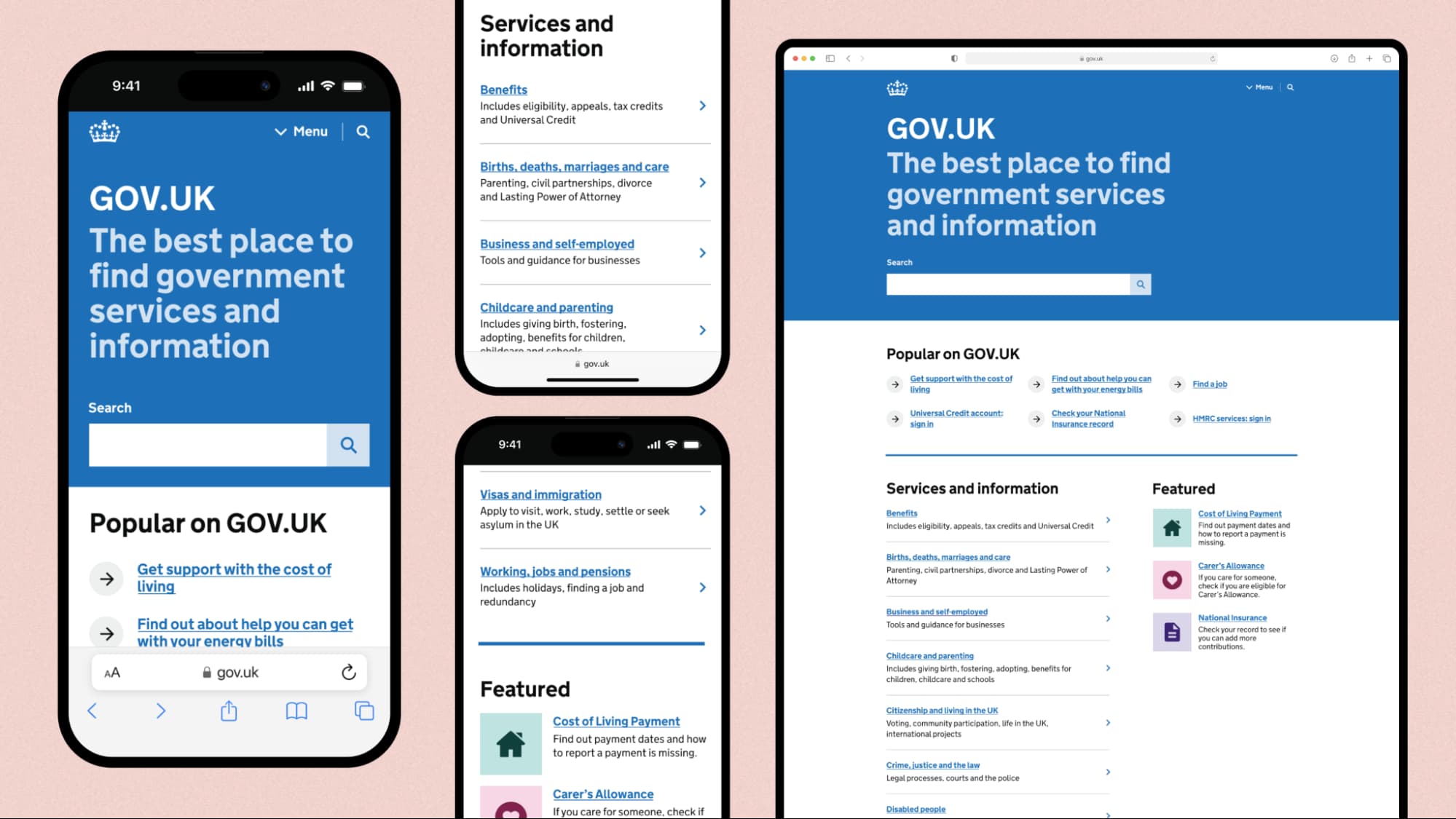
The Pattern in Government: GOV.UK
The electric vehicle example is clean because it’s over—we can see both layers clearly now. But when GOV.UK launched, the Macguffin Pattern wasn’t obvious. It looked like a website project.
Matter Layer (What Got Funded):
- Replace 1,882 government websites with one
- Deliver 25 exemplar services
- Demonstrate £1.3bn in savings over the Parliament
- Improve citizen satisfaction scores
This was fundable. Measurable. Politically safe. A website consolidation project.
Meta Layer (What Needed to Change):
- The IT supplier oligopoly controlling government technology
- Waterfall procurement and multi-year contracts
- Policy-as-documents culture (PDFs as interface)
- Absence of service design as a profession in government
- Departmental silos preventing cross-government services
You couldn’t get funding for “restructure government’s relationship with technology suppliers.” That dies in governance. Too ambitious. Too political. Too vague.
Design Intent (The Connection): Every implementation choice made the old way harder to defend:
-
Multidisciplinary teams → You can’t build GOV.UK with just developers or just policy people. Requires designers, researchers, product managers. Creates demand for new skills.
-
User research primacy → “Start with user needs” becomes the standard. Makes policy-first approaches look backwards.
-
Agile delivery → 2-week sprints expose how slow waterfall is. Evidence accumulates that fast iteration works.
-
Open source by default → Breaks dependency on proprietary systems. Transparency makes vendor lock-in visible.
-
Service standards → Creates quality bar that legacy approaches can’t meet. “Meet the standard or explain why not” shifts power.
The visible project (website) was designed to make invisible constraints (procurement, culture, skills) impossible to sustain.
More Everyday Macguffins
Let’s look at a few more examples to sharpen our pattern recognition:
Contactless Payment Cards

Matter Layer:
- Sell convenience: tap to pay, no PIN for small purchases
- Faster checkout times, reduced queuing
- Marketing focuses on speed and ease
Meta Layer:
- Normalise accepting non-cash payments at small merchants (corner shops, markets, food trucks)
- Force payment terminal upgrades across entire retail sector
- Create infrastructure for phone-based payment (Apple Pay, Google Pay)
- Shift cultural expectations: cash becomes the exception, not the default
Design Intent:
- Consumer adoption creates merchant pressure (“why don’t you take contactless?”)
- Speed advantage makes cash feel slow and inconvenient
- Terminal manufacturers push upgrade cycle
- Banks don’t need to convince anyone to “go cashless”—behaviour shifts organically
You couldn’t mandate “eliminate cash payments” (political nightmare, exclusion concerns). But you CAN make card payments so convenient that cash becomes the awkward option.
Netflix and Streaming Services
Matter Layer:
- Unlimited entertainment for £10/month
- Original content and back catalogues
- Marketing focuses on convenience and value
Meta Layer:
- Dismantle broadcast scheduling as primary content delivery
- Force television production to rethink episode length, series structure, release patterns
- Shift advertising model entirely (no ad breaks → subscription revenue)
- Change how audiences discover and consume content (binge-watching becomes normal)
Design Intent:
- “Watch what you want, when you want” makes scheduled broadcasting feel restrictive
- Binge-release model creates cultural moments traditional TV can’t match
- Global distribution makes regional licensing untenable
- Original content forces traditional studios to compete on streaming’s terms
You couldn’t get funding for “destroy the broadcast television model.” But you CAN offer unlimited streaming, and the rest follows.
Notice the pattern: In each case, the Meta layer couldn’t be approved or funded directly. But the Matter layer is legitimate, delivers genuine value, and necessarily creates conditions that make the old system impossible to sustain.
How to Think About Your Own Work
The question isn’t “is this a Macguffin?” The question is “could this be designed as one?”
Here’s the conceptual framework for analysing any project:
1. Start With What’s Fundable (Matter Layer)
Every project begins with something stakeholders agreed to fund. Identify:
- Your deliverables (what you’re producing)
- The problem as officially framed (the narrative)
- Success criteria (what counts as “done”)
Signals you’re in constraint-shaped territory: Problem statements include words like “implement,” “comply with,” “ensure.” Success metrics focus only on delivery, not outcomes. Timeline feels arbitrary (12 months because that’s a budget year). Constraints listed but never questioned.
Signals there’s potential for constraint-shaping: Problem statements include “test whether,” “explore alternatives to,” “evaluate assumptions.” Success metrics include learning and evidence generation. Scope acknowledges systemic issues but doesn’t know how to tackle them. Stakeholders express frustration with “the way things are done.”
2. Surface What Actually Needs Changing (Meta Layer)
Dig beneath the official project to find what really needs to change.
About constraints:
- What constraints are baked into this brief?
- What assumptions does the problem statement make?
- What would this project be if [constraint X] didn’t exist?
- Who designed this problem definition, and what were they protecting?
Every problem statement embeds assumptions. “Improve verification process” assumes verification is necessary. “Design fraud journey” assumes fraud is intentional deception. What’s being taken as given that could be questioned?
About real stakes:
- If this project succeeds perfectly, what still won’t change?
- What problem would solving this visible problem reveal?
- What would make this constraint untenable?
Imagine flawless execution—every deliverable met, every metric hit. What systemic problem persists? That’s often your real target.
About evidence:
- What evidence will this project generate that doesn’t exist today?
- Which stakeholders would find that evidence compelling?
- What data would make the current approach impossible to defend?
This is your leverage point. Every project produces data. Design what yours creates.
3. Design the Connection (Intent Layer)
This is where strategic design actually happens. For each implementation choice, ask:
Does this choice:
- Generate evidence that challenges the constraint?
- Create dependencies that force systemic change?
- Make the old way harder to defend?
- Build organisational capability that outlasts the project?
Examples of strategic implementation choices:
Pilot location selection:
- Constraint-shaped: Choose easy locations for quick wins
- Constraint-shaping: Choose locations that expose the policy’s core assumptions
Success metrics:
- Constraint-shaped: “80% adoption rate”
- Constraint-shaping: “Completion rate by demographic” (exposes exclusion patterns)
Delivery approach:
- Constraint-shaped: Build within existing systems
- Constraint-shaping: Build prototype that proves legacy systems are the bottleneck
Documentation:
- Constraint-shaped: User research for design team
- Constraint-shaping: User research formatted for policy stakeholders
Every choice either reinforces constraints or creates pressure on them. There’s no neutral ground.
How Macguffins Fail
Failed Macguffins collapse in three predictable ways:
1. Matter Layer Loses Focus
What it looks like: The deliverable becomes too ambitious. Scope creeps. You’re trying to fix everything at once.
Example: A “digital service transformation” project becomes “transform the entire department” and ships nothing. Teams add features, expand scope, lose sight of what made the original project fundable.
Why it fails: When Matter layer collapses, you achieve neither delivery nor transformation. You get cancelled in governance for being unrealistic.
2. Meta Layer Becomes Too Vague
What it looks like: You claim strategic intent but can’t articulate what constraint you’re targeting.
Example: “This will drive cultural change” / “This will modernise government” / “This enables transformation.”
Why it fails: Vague Meta layers mean no one designs the connection. Project delivers, generates no systemic pressure, changes nothing. Strategic theatre.
Real example: NHS Digital Health Apps
- Matter layer: Commission approved health apps for various conditions
- Meta layer (claimed): Shift from reactive treatment to preventative care
- Failure mode: Meta goal too vague to design for. Apps got delivered, ticked boxes, changed nothing about how the NHS operates or thinks about prevention. No mechanism to connect app usage to clinical pathways.
3. Connection Between Layers Breaks
What it looks like: The deliverable succeeds on its own terms but generates no evidence or pressure on the constraint.
Example: Government Digital Identity Programme
- Matter layer: Single digital identity system for accessing government services
- Meta layer (intended): Transform how departments share citizen data and reduce duplication
- Failure mode: Implementation broke the connection—identity platform delivered without the organisational changes needed (departments still operated in silos, no data-sharing agreements, governance remained departmental). Matter layer shipped; Meta layer never materialised.
Why it fails: If implementation choices don’t force the issue, the Meta layer stays theoretical. You get incremental delivery with strategic aspiration.
The Uncomfortable Distinctions
Let me be clear about what this pattern is and isn’t:
This Is Not “Projects Have Side Effects”
Everything has unintended consequences. That’s not strategic—it’s entropy.
The Macguffin Pattern requires intentional design from the start. You’re not hoping for systemic change; you’re engineering conditions that make it necessary.
This Is Not “Hidden Agendas”
A Macguffin isn’t deception. The Matter layer must genuinely deliver value. If you’re lying about what you’re building to sneak in change, that’s manipulation, not strategy.
The Meta layer often can’t be articulated in the initial business case because you haven’t generated the evidence yet. But you’re designing the project to create that evidence and make the conversation possible.
This Is Not “Always Strategic”
Most projects don’t need to be Macguffins. Sometimes optimisation within constraints genuinely serves users best. Sometimes the systemic change isn’t ready politically. Sometimes you lack the organisational leverage.
Strategic theatre is worse than honest incremental delivery.
If you call something strategic when it’s not, you waste everyone’s time and exhaust good designers. Better to deliver well, serve users, and save strategic energy for work that needs it.
Examples of Strategic Theatre
To sharpen the distinction, here’s what strategic theatre looks like:
Example 1: The National Fraud Initiative
- Theatre version: “We’re doing sophisticated data matching across public sector databases to detect fraud!”
- Reality: Generates thousands of matches, most false positives, no capacity to investigate, no change to upstream processes that create vulnerability. Looks strategic, changes nothing.
Example 2: Government “Digital Transformation” Programmes
- Theatre version: Multi-year programme, glossy roadmaps, transformation language
- Reality: Systematically taking paper forms and putting them online (digitisation not transformation). Same org structure, same policy assumptions, same user burden—just faster. Complicated delivery pretending to be strategy.
Example 3: “Strategic Partnerships”
- Theatre version: Department partners with technology companies for “innovation”
- Reality: Pilot runs, positive PR, learning captured in reports nobody reads, partnership ends, no procurement changes, no policy influence, organisation returns to business as usual. Aspiration without mechanism.
The distinction: These claim strategic intent but have no design connecting Matter to Meta. They’re hoping for transformation rather than engineering it.
When You Have Leverage vs. When You Don’t
Here’s the hard truth: Service designers often lack genuine power over Meta layers.
You can design the perfect Macguffin on paper, but if you can’t influence policy, procurement, or organisational design, it stays theoretical.
The pattern requires:
- Political savvy (knowing who needs what evidence when)
- Patient capital (time to let pressure build)
- Organisational position (access to decision-makers who control constraints)
If you’re a designer embedded in a delivery team, your leverage is limited. You can design evidence-generating implementations. You can surface contradictions. But you can’t force systemic change alone.
What you can do:
- Design your deliverables to generate evidence policy teams can’t ignore
- Frame findings as “learning questions” not accusations
- Build alliances with people who do have leverage over constraints
- Document patterns so future designers can build on your work
What you can’t do:
- Force constraint changes through delivery alone
- Bypass political realities with clever design
- Transform systems without organisational permission
Know the difference. Use the pattern where you have leverage. Do excellent delivery where you don’t.
Pace Layers and Strategic Timing
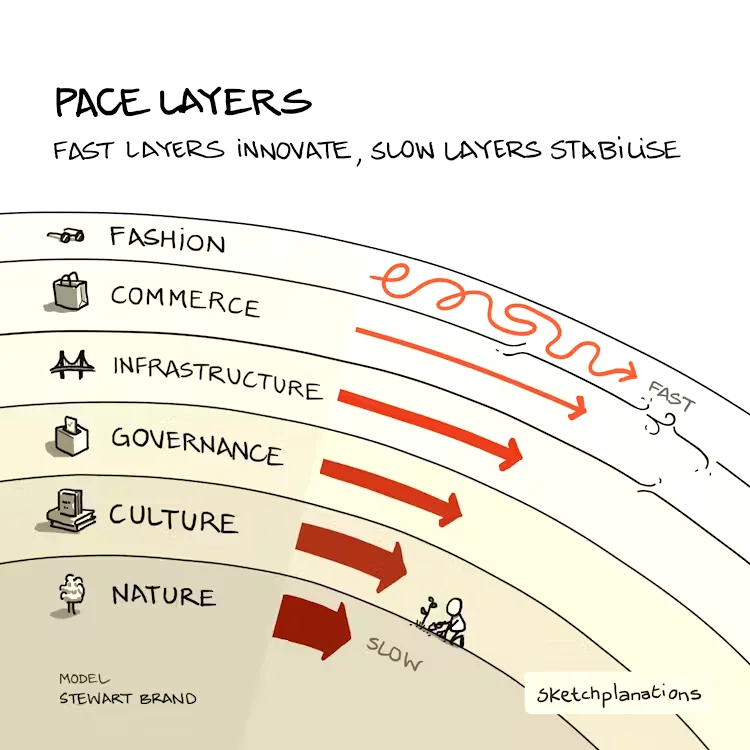
Dan Hill explicitly connects Macguffins to Stewart Brand’s pace layers concept. This matters for understanding when the pattern works:
Fast layer (6-18 months): Your deliverable project Medium layer (2-5 years): Organisational practices, procurement approaches Slow layer (5-10 years): Policy assumptions, institutional culture
The strategic move: Design fast-layer deliverables to create pressure on medium-layer constraints.
You can’t use a 6-month pilot to change 10-year policy assumptions directly. But you CAN use it to shift 2-5 year procurement practices, which eventually create conditions for policy change.
Example: Digital Service Pilot
- Fast layer: 6-month trial of new digital service approach in one location
- Designed to shift medium layer: Procurement moves from waterfall contracts to agile teams
- How it works:
- Trial is legitimate: test if agile delivery reduces time-to-market
- But implementation choices deliberately target procurement:
- Build with multidisciplinary team not contractors → creates skills precedent
- Demonstrate 40% faster delivery → creates efficiency case for procurement change
- Surface integration challenges → exposes how legacy contracts create barriers
- Show user satisfaction improvements → builds political case for scaling
The connection: You couldn’t get funding for “let’s redesign our entire procurement approach.” But you CAN get funding for “let’s trial a new service delivery method.” The trial is designed so that scaling it requires exactly those procurement changes you couldn’t approve directly.
Key insight: Match your Macguffin to the right layer. Don’t try to use fast-layer work to shift slow-layer constraints directly—it won’t work. But fast can shift medium, and medium can shift slow.
Practical Application: Reframing Problem Statements
The clearest signal of constraint-shaping work is how you frame the problem.
Constraint-shaped problem statements accept the constraint:
- “Implement digital identity verification”
- “Improve fraud prevention journey”
- “Design benefits application process”
Constraint-shaping problem statements include the constraint as target:
- “Test whether universal upfront identity verification is compatible with digital service delivery and equitable access”
- “Determine whether current fraud prevention assumptions create more harm than the fraud they prevent”
- “Evaluate whether upfront verification requirements are necessary for risk management, given completion rate impact”
The reframe should:
- Make the constraint explicit
- Position it as something being tested, not assumed
- Include both Matter (delivery) and Meta (systemic question)
- Create permission to challenge based on evidence
It’s designing permission to generate inconvenient truths.
The Diagnostic Questions, Expanded
A question to ask is “Which constraint are we accepting vs. which constraint are we targeting?”
Now you can expand it into a full diagnostic framework:
- Which constraint are we targeting? (Meta layer—be specific)
- What evidence would make it untenable? (What you need to prove)
- What are we delivering that generates that evidence? (Matter layer)
- How do our implementation choices ensure the connection? (Design intent)
If you can answer all four, you’re designing a Macguffin.
If you can’t answer #1, you’re doing incremental delivery (which might be fine).
If you can’t answer #4, you’re doing strategic theatre (which is never fine).
Applying this framework doesn’t mean building elaborate documents. It means thinking clearly about what you’re actually trying to change and whether your project is designed to create the pressure needed for that change.
Most strategic work happens in small implementation choices, not grand plans:
- Which users you recruit for research
- How you structure findings presentations
- What metrics you choose to track
- Where you run pilots
- How you document what you learn
These choices either reinforce the status quo or create evidence that makes it untenable.
What Makes Constraint-Shaping Possible
Not every constraint can or should be shaped. Here’s when the pattern has genuine potential:
Strong candidates for constraint-shaping:
- Constraints causing demonstrable user harm
- Organisational habits rather than legal requirements
- Procurement or technology choices made years ago
- Assumptions nobody remembers choosing
- “The way we’ve always done it” practices
Poor candidates for constraint-shaping:
- Legal or regulatory requirements (need policy change first)
- Constraints protecting vulnerable populations
- Resource limitations you can’t change through evidence
- Systemic issues beyond your organisation’s control
The ethical test: Would changing this constraint genuinely serve users better, or are you just frustrated with organisational friction? Constraint-shaping for its own sake isn’t strategic—it’s ego.
Final Provocations
On ambition: Most “strategic” government projects aren’t actually strategic—they’re just complicated delivery with aspiration. They achieve neither genuine leverage nor meta-level change.
The Macguffin Pattern helps you distinguish between genuine strategic work and theatre. If you can’t articulate how your implementation choices connect delivery to systemic change, you’re not being strategic—you’re being hopeful.
On responsibility: You can deliver the perfect service, nail every user need, hit every KPI, and still leave the underlying system exactly as broken as when you started. Because you optimised within constraints instead of using your project to shift what those constraints are.
This isn’t to say every project must be transformational. But if the constraints are causing genuine harm—if they create poverty traps, exclude vulnerable users, or perpetuate injustice—then “excellent delivery within constraints” might not be ethical.
On honesty: Strategic theatre wastes everyone’s time and exhausts good designers. Better to do honest incremental delivery than to pretend complexity equals strategy.
The Macguffin Pattern requires ruthless honesty about:
- What you’re actually trying to change (Meta)
- Whether you have leverage to change it (Organisational reality)
- Whether your implementation creates genuine pressure (Design intent)
Without that honesty, you’re building castles in the air.
What To Do Next
If you’re starting a new project:
- Use the diagnostic questions before committing to an approach
- Identify what constraint you’re accepting vs. targeting
- Design implementation choices that connect Matter to Meta
- Be honest about your leverage (or lack of it)
If you’re mid-project:
- Map your three layers (Matter/Meta/Intent)
- Check if the connection is holding or breaking
- Strengthen implementation choices that create systemic pressure
- Accept if you’re doing incremental work and stop pretending it’s strategic
If you’re evaluating past work:
- Analyse successful transformations through this lens
- See which ones were deliberate Macguffins vs. accidents
- Extract patterns you can apply to future work
- Share the pattern with other designers
Further Context
The Macguffin concept comes from Dan Hill’s writing on “dark matter”—the organisational, political, and cultural context that shapes what’s possible in design. He argues that most designers focus on the visible project layer whilst ignoring the constraint layer that determines whether change is possible.
Stewart Brand’s “Pace Layers” framework helps explain why the pattern works: fast-moving layers (projects) can create pressure on slow-moving layers (policy, culture) if designed correctly.
Donella Meadows’ “Leverage Points” framework complements this: the highest-leverage interventions aren’t about optimising system parameters, but about changing the rules that govern the system.
The Macguffin Pattern sits at the intersection of these ideas: using fast-layer delivery to shift medium-layer constraints by designing the connection between them.
A Note on Language
I’ve used “Matter/Meta/Design Intent” language in this piece because it’s precise. But you don’t need to use this terminology with stakeholders.
In business cases and governance papers, frame it as:
- “What we’re delivering” (Matter)
- “What we’re learning” (Meta, reframed as evidence generation)
- “How our approach ensures valid findings” (Design Intent, reframed as methodology)
The pattern works regardless of what you call it. What matters is the thinking—designing implementation choices that connect delivery to systemic change.
With your colleagues and other designers, you might stick with the more accessible language from my LinkedIn post: “Which constraint are we accepting vs. which constraint are we targeting?” This often resonates more immediately than technical terminology.
The goal isn’t to make everything a Macguffin.
The goal is to know the difference between work that changes systems, work that optimises systems, and work that pretends to change systems.
Then design accordingly.