Don't shake off imposter syndrome. Rehearse a new persona instead
What a film about Elizabeth Holmes taught me about imposter syndrome, persona, and stepping into design leadership.
Written For
Designers stepping into their first leadership role. You know imposter syndrome first-hand; you don't need to have seen the film and this article is spoiler free.
Imposter syndrome and reality distortion fields
The mark of a good film, book, music or piece of art is when you wake up in the middle of the night thinking about it. This happened to me after seeing You Can See Everything by Nathan Fielder and Lance Oppenheim. It connected with something I’d been circling for the past 12 months as a new design leader.
Like Dorothy emerging from her home in Technicolor Oz, I felt a veil had been lifted. Somehow the fragmented thoughts, feelings, and suspicions I held about power, and the performances we apply in our lives started to come into focus.
If you look up the definition of Imposter Syndrome, there’s a good chance it will have my name against it. No matter how old or senior you become, it remains a constant companion. Prior to watching the film, my reflection on moving into a design leadership role is that you give up the thing that defined you. Now I realise that the comfortable design role that you take for granted is just another mask that you’ve got used to.
This brings me on to my distaste and grudging respect for the people who deploy their reality distortion field to how they interact with the world. We’ve all met someone in our lives who appears to have no inner critic to guide their thoughts and actions. If the imposter is highly conscious of their mask and thinks everyone else can see it too, then the distortion-field person has stopped seeing the mask at all.
Telegenic
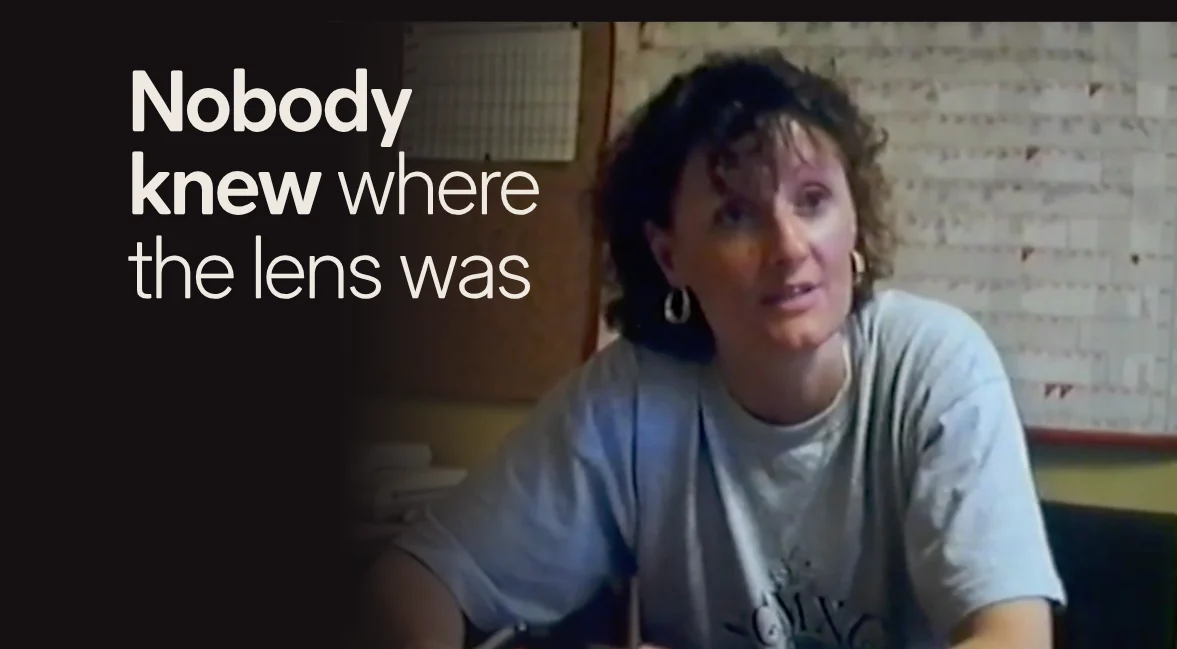
Telegenic is the word used to describe performers who know where the camera lens is and where to look on TV. Looking back at TV footage from the 1980s and 90s and the regular person on the street being interviewed is looking everywhere but the camera. It makes for authentic viewing because there’s a lack of polish with having a TV camera in your face. Contrast that with influencers today who seem to be dripping in confidence and a highly attuned on-camera presence.
A question running through the film is who is being authentic? Who is in control and who is being manipulated? The lack of situational awareness gets painfully dissected when the interviewer Nathan Fielder has to explain to Elizabeth Holmes why Abbott and Costello’s famous “Who’s on First?” baseball sketch is a metaphor for the situation she finds herself in. Only to be met with a blank response on the surface.
And it’s the format of the film in the second half (no spoilers) that shifts things away from a conventional documentary film. It starts to pull the rug from under the viewer as to how narratives can be shaped and that it’s never been easier to shape that narrative.
Social media provides fertile conditions for influencers to apply their distortion field because it’s free to get a large audience. You can have a talent or a point of view on a matter and there’s a good chance there’s an audience for it.
If, as the film suggests, the medium shapes the story, does this apply to social influencers where ‘their world’ and reality collide?
Rehearsal
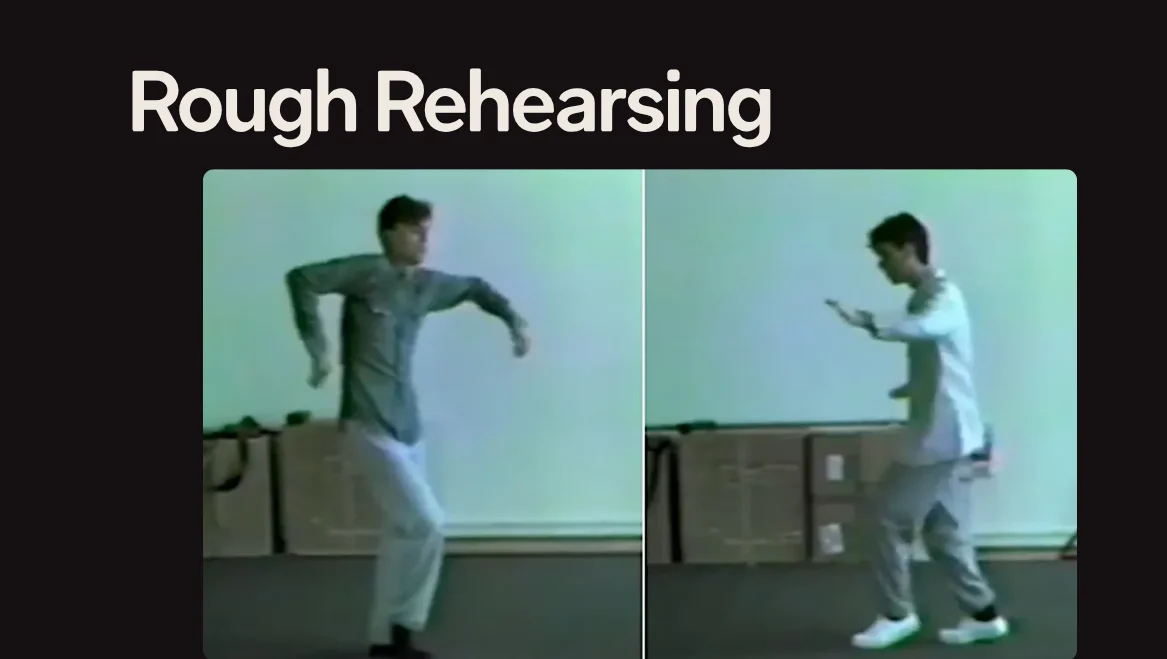
I think it does, and it applies to someone stepping into their first design leadership position too. Stepping into the role, you’re that person on the street, unsure where the lens is. What I grudgingly respect in influencers is that they found the medium that suits them. Can someone new to the role of design leader do the same?
Earlier this year, the piece of advice that stuck with me was to put stuff out into the world. It didn’t need to be polished; it was about the act of creating and sending it out to the world, and doing it consistently. What started as a series of articles on my blog and LinkedIn quickly built its own momentum, both in my leadership role and in connecting me to a community of service designers.
A guiding principle is borrow the technique, not the belief, from Holmes and social influencers. Think about using different channels and spaces where you can safely rehearse a persona by putting stuff out into the world. Weeknotes can be a helpful practice to develop, where rough thoughts and ideas build up over time. Weeknotes work because they are the workings, with doubts built in. Thoughts and opinions that you may feel uncomfortable expressing in meetings can be given space to breathe. I can use weeknotes to express rough ideas that might evolve later into a blog post, or something I say in a meeting. The point isn’t the channel, it’s the technique and the habit of creating and showing work as you would in a design crit session.
My advice isn’t to shake the imposter feeling completely. I believe you still need that critical voice to ground you. But become more comfortable with trying new personae that help you adapt to the new role. Dr James Hollis describes in The Middle Passage: From Misery to Meaning in Midlife (1993) how the persona we take on is necessary, but the danger comes when we start believing we are the role.
The role of a design leader isn’t pre-packaged. It is for you to shape. Write a rough draft of an idea so that when it comes to expressing it through a leadership persona, it no longer feels like a performance.